
Stage 2 Bedsores

- Reviewed By
Anthony C. Lanzone, Founding Partner
- Care facilities like nursing homes, assisted living facilities, and hospitals have a legal duty to provide proper custodial care to residents to prevent the development of life-threatening injuries like bedsores.
- Stage 2 bedsores involve red or pink skin, skin loss, abrasions, and blisters, and can quickly worsen into a more serious condition.
- If you or a loved one has developed bedsores, it may indicate inadequate care, neglect, or even abuse. You may be able to sue the facility if their negligence or improper care contributed to the development or worsening of pressure ulcers.
Bedsores are injuries to the skin and underlying tissue caused by prolonged pressure. They most commonly develop in nursing home residents who are immobile or neglected. The severity of a bedsore is classified into stages, with higher stages indicating deeper, more dangerous wounds. These stages not only determine medical treatment but may also reveal neglect or abuse by nursing home staff.
If your loved one is suffering from a bedsore, our team at Lanzone Morgan, LLP, can help. Call us at (888) 887-9777 for a free consultation to protect their rights and well-being.
What is a Stage 2 Bedsore Injury?
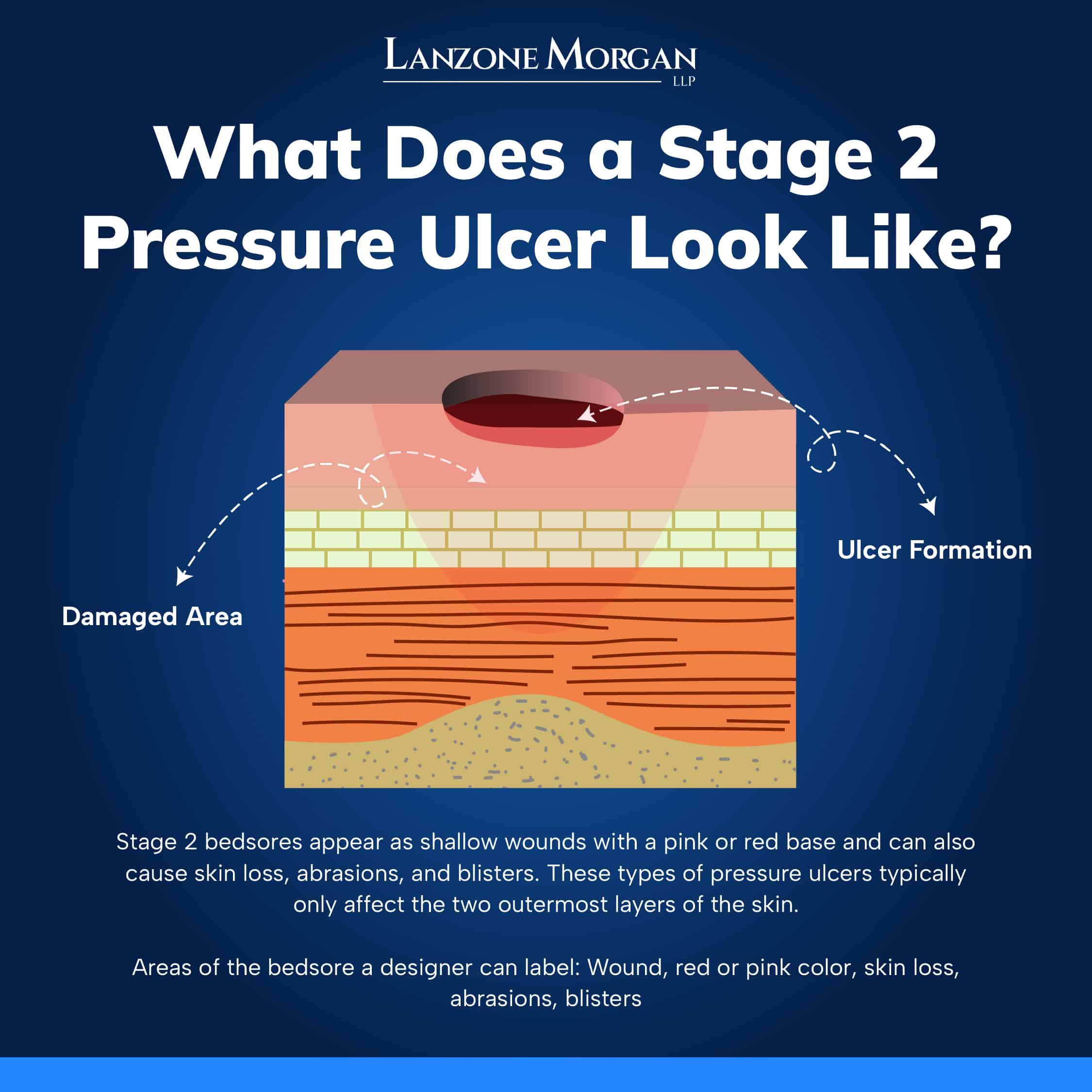
A stage 2 bedsore injury is a type of pressure ulcer that involves partial-thickness skin loss of the epidermis and dermis—the two outermost layers of the skin. People who are older, immobile, or bedridden are usually the most likely to develop bedsores due to prolonged pressure on the skin. Friction, moisture, and traction can also lead to bedsores.
At stage 2, bedsores can appear red or pink and irritated, and may be accompanied by a loss of skin or the development of blisters.
Health care providers use a staging system to determine the severity of pressure ulcers, commonly referred to as bedsores. There are four stages of these sores, and stage 2 is a moderately serious condition that can lead to further infection if left untreated, hidden, or mischaracterized by health care providers.
Stage 2 Bedsore Signs and Symptoms
A stage 2 bedsore appears as a shallow wound with a pink or red base and can also cause skin loss, abrasions, and blisters. These wounds can be painful and itchy, and fevers and chills are often the first signs of an infection. An infected bedsore may be extremely painful, foul-smelling, red, warm to the touch, swollen, or oozing pus.
An open sore is a medical emergency, especially for elderly patients and others with compromised immune systems. Many families only notice these sores after they have already developed into stage 3 or 4 wounds. However, frequent repositioning and regular checks for signs of pressure ulcers can help prevent the condition from worsening.
Treatment for Stage 2 Bedsores
Generally, stage 1 and 2 pressure ulcers don’t require surgical measures. Some studies have found that after six months of treatment, stage 2 sores heal in over 70% of cases. A caregiver may be able to treat stage 2 bedsores that are less severe by cleaning the wound with soap and water or a saline solution, then dressing it with specialized medical bandages designed to promote healing.
Bedsores typically result from prolonged pressure and inaction by staff in nursing homes, hospitals, residential care facilities, and assisted living facilities. When staff at these facilities fail to use preventive measures to prevent bedsores from developing, it may constitute neglect, entitling the resident to take legal action.
Some of the prevention methods nursing facilities should implement include the following:
- Changing a patient’s position every 15 minutes if they are seated or every one to two hours if they are in a bed
- Checking each patient’s skin regularly
- Providing patients with a nutritious diet and adequate hydration
- Keeping patients’ skin clean and dry
- Washing and changing patients’ sheets and clothes often
“Nursing homes have a duty to do everything in their power to prevent a resident from getting a pressure sore. Or, if the resident already has a pressure sore or bed sore when they enter the facility, the nursing home has a duty under federal law to do everything possible to prevent the worsening of that already existing pressure sore. Federal regulation states that, based on the comprehensive assessment of a resident, the facility must ensure that: Number one, a resident who enters the facility without a pressure sore does not develop a pressure sore unless the individual's clinical condition demonstrates that it was unavoidable. Number two, a resident with pressure sores receives necessary treatment and services to promote healing, prevent infection, and prevent new sores from developing. So, while not every pressure sore or bed sore is preventable, the nursing home has a legal duty to do everything in its power to prevent them from developing.”
James Morgan, Founding Partner
Health Risks Associated with Untreated Stage 2 Bedsores
Bedsores increase your risk of potentially life-threatening bacterial infections like cellulitis and septicemia, as well as sepsis. At stage 2, the risk of infection increases, making proper care and treatment essential; these wounds can deteriorate quickly if left unattended. Failing to properly treat a stage 2 bedsore in time can lead to the development of a stage 3 or 4 bedsore, which is much more severe and can result in long-term disability or hospitalization.
Pressure ulcers are unfortunately common injuries in nursing homes. If you believe your loved one may be at risk for developing bedsores, alert their health care provider if you notice changes in their skin color, signs of infection, or skin tenderness, pain, or warmth.
Why Families Trust Lanzone Morgan, LLP, with Bedsore Cases
If you believe a nursing home or care provider’s negligence led to your loved one’s bedsores, you may be able to hold the facility accountable through a nursing home bedsore lawsuit.
At Lanzone Morgan, LLP, our attorneys are nationally recognized for handling nursing home and elder abuse cases. With over 75 years of combined experience, we’re passionate about seeking justice for victims of elder abuse and neglect in care facilities across California.
Over the years, we have recovered more than $250 million in compensation for elderly victims and their families. Some of our notable results in bedsore cases include the following:
- $3 million settlement for a dependent adult who incurred an infected coccyx bed sore while residing at a skilled nursing facility
- $1.25 million settlement for an elderly resident of an assisted living facility who was neglected and acquired a bedsore
- $1 million settlement for an elderly woman who acquired a horrific bed sore at a skilled nursing facility
If you or a loved one has suffered from bedsores due to a nursing home’s negligence, call us at 888-887-9777 or contact us online today for a free consultation.
- Fact-Checked
This content has been legally reviewed and approved by nursing home abuse attorney, Anthony Lanzone. Anthony holds notable memberships with professional organizations including the American Association for Justice and Consumer Attorneys of California.
- Fact-Checked
This content has been legally reviewed and approved by nursing home abuse attorney, Anthony Lanzone. Anthony holds notable memberships with professional organizations including the American Association for Justice and Consumer Attorneys of California.